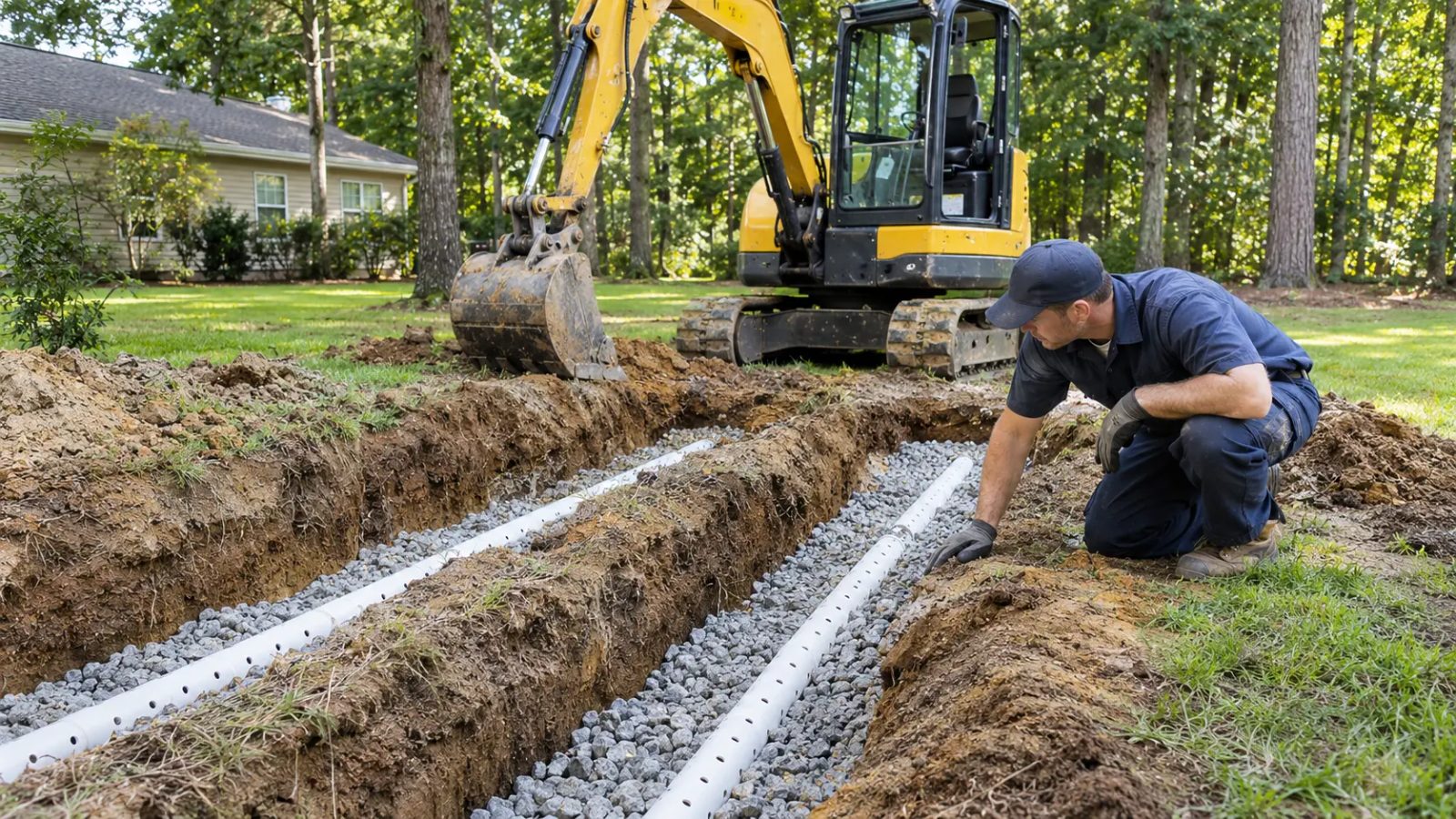
Address Wastewater Absorption Problems
Septic Drain Field Repair and Assessment
Arrange an assessment of your drain field. Get a Free Estimate
The drain field receives wastewater from the septic system and allows further treatment through suitable soil. When this area cannot accept or distribute wastewater properly, problems may appear both outdoors and inside the building.
Persistent wet ground, sewage odors and drainage difficulties can indicate a drain field concern, but they do not establish the exact cause. Saturated soil, damaged distribution equipment and excessive wastewater loading are among the possibilities.
We accept drain field repair requests throughout Suffolk and neighboring communities. The contractor can investigate the conditions and discuss whether targeted corrective work, additional evaluation or replacement is appropriate.
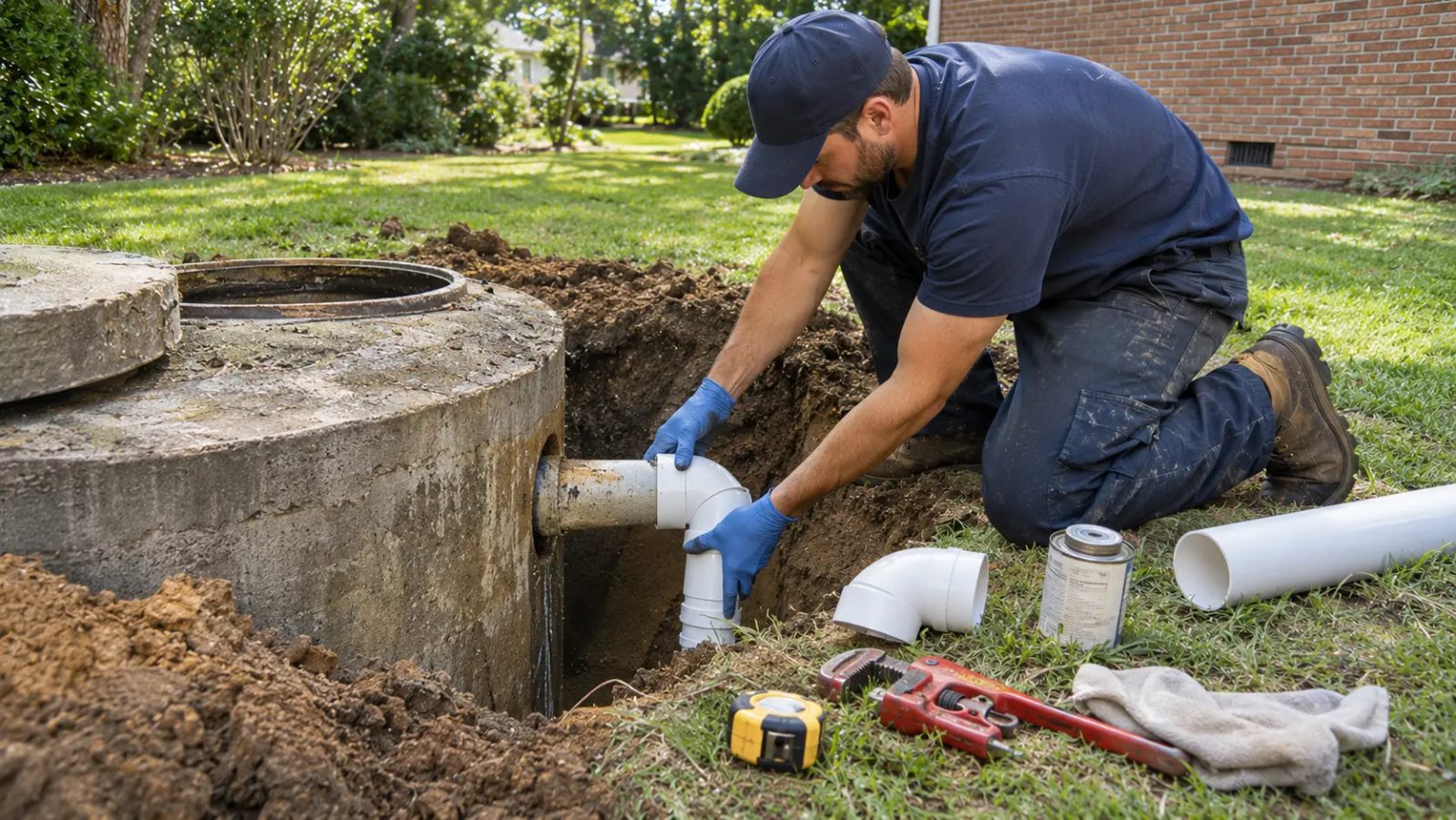
Drain field work must account for soil treatment capacity, existing equipment and applicable health requirements. The appropriate solution depends on why the absorption area is struggling rather than simply where the symptoms appear.
Some septic systems use distribution components to direct wastewater toward different sections of the absorption area. When these components become damaged, obstructed or improperly positioned, one section may receive more wastewater than intended. This can contribute to localized saturation even when other sections appear relatively dry. The contractor can examine accessible distribution equipment and consider whether wastewater is reaching the intended areas. Corrective work may involve repairing or replacing a particular component where appropriate. The condition of the surrounding soil and downstream lines must also be considered. Restoring distribution does not necessarily resolve damage that has already developed within the absorption area.
A drain field has a limited capacity to receive wastewater under its particular soil and operating conditions. Excessive household water use, leaking fixtures or unusually wet ground can contribute to loading beyond what the system can manage effectively. Symptoms may become more noticeable during extended rainfall. Investigation should consider both the wastewater entering the system and external water reaching the absorption area. Correcting plumbing leaks or inappropriate surface drainage may form part of the response. However, persistent saturation can indicate more substantial concerns. The contractor must distinguish temporary environmental conditions from an ongoing inability to treat and disperse wastewater.
Buried dispersal lines may be affected by vehicle loading, soil disturbance, root intrusion or other physical damage. A damaged line can interfere with the intended movement of wastewater and create localized performance problems. Identifying its location and condition may require additional investigation. The contractor can discuss whether targeted repair is suitable for the existing system. Excavation must account for nearby components, utilities and the importance of protecting suitable treatment soil. Avoid driving heavy equipment over the suspected area or attempting to expose lines yourself. Establish what restoration and applicable approvals are included before authorizing corrective work.
A drain field that can no longer provide suitable wastewater treatment may require replacement rather than a limited repair. This decision should be supported by appropriate evaluation of the existing system and available site conditions. A persistently wet yard alone does not establish which replacement design would be acceptable. Existing property records may identify a designated replacement area, but its suitability must still be considered under applicable requirements. Buildings, wells, boundaries and subsequent property improvements can affect available options. The contractor can discuss necessary design and permitting arrangements. Before proceeding, establish how the existing system will be managed during the transition and what future maintenance the replacement system requires.
Describe where wetness or other symptoms occur and whether they change with rainfall or water use.
The contractor can assess individual distribution or dispersal components before recommending broader changes.
Requests involving replacement can include discussion of site evaluation, approvals and construction requirements.
Find out what may be interfering with wastewater absorption at your property.
Free — no obligations
Identify visible wetness, odors, drainage changes and any recent property activity.
The contractor considers wastewater loading, accessible distribution components and relevant site conditions.
Discuss whether maintenance, targeted repair, further evaluation or replacement is appropriate.
Follow the contractor's recommendations concerning water use, ground protection and subsequent maintenance.
Not by itself. Unusual vegetation growth should be considered alongside wetness, odors, drainage symptoms and other observations.
Yes. Saturated soil may have reduced capacity to accept wastewater, although recurring problems deserve further assessment.
Targeted repair may be possible depending on the system design, soil condition and applicable requirements. The contractor must establish whether the remaining field is suitable.
Large trees and shrubs can create root-related concerns around buried components. Discuss suitable vegetation and planting locations with the contractor.