
Investigating Septic System Faults
Septic Tank Repair and Troubleshooting
Get your septic problem assessed. Get a Free Estimate
A septic tank problem can interrupt ordinary household activities and create sanitation concerns. Slow drainage, unusual odors, damaged covers and wastewater backups are all reasons to investigate the condition of the system.
The symptoms alone do not establish which component has failed. Problems involving pipes, filters, fittings or mechanical equipment can resemble more substantial tank defects.
We accept repair requests and pass the details to an independent contractor who can assess the situation. Describe what has changed, when the problem began and whether previous maintenance provided any temporary improvement.
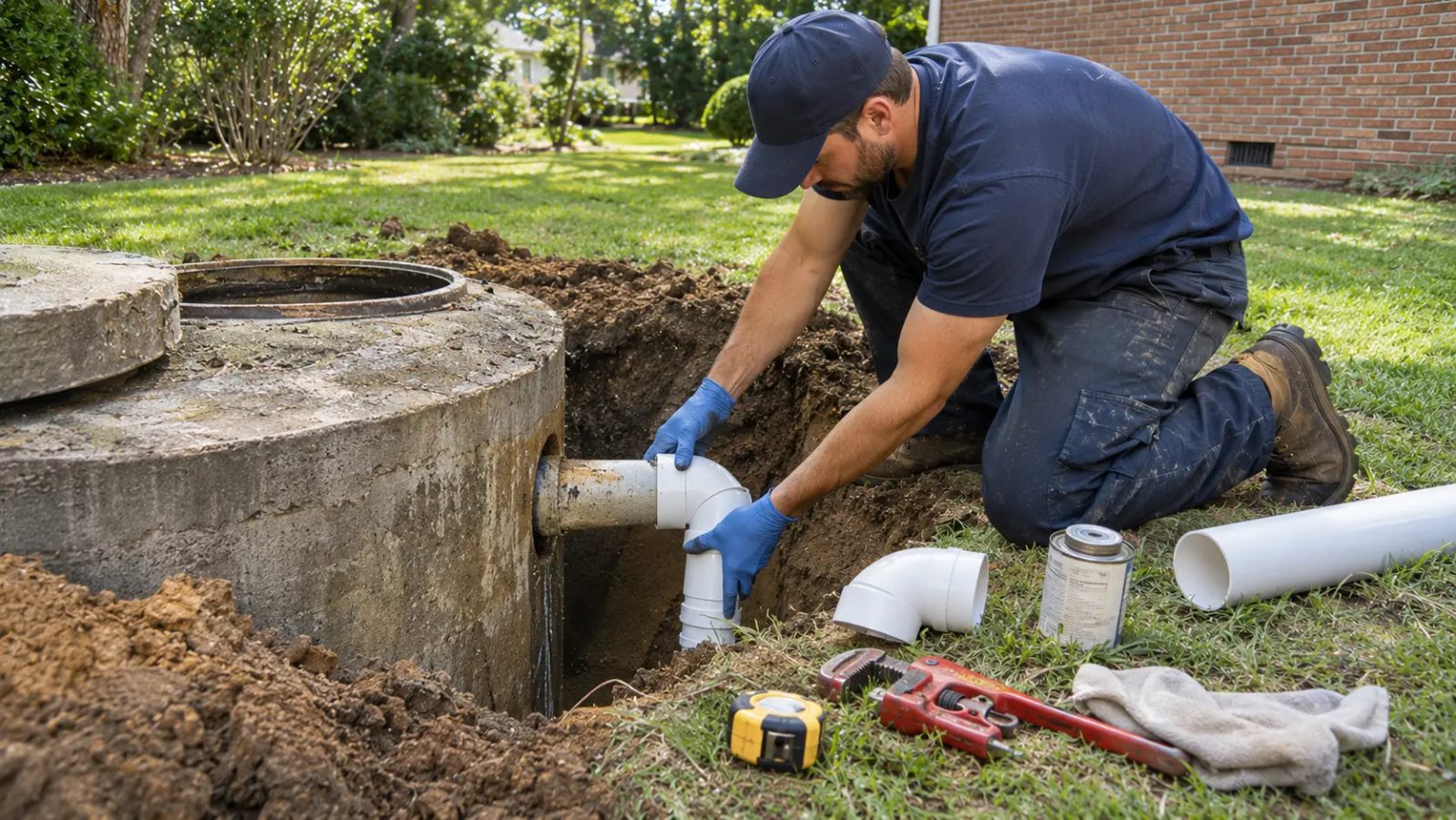
Effective repairs begin with identifying the affected component and understanding why it stopped functioning. The contractor should explain the findings and proposed corrective work before making substantial changes to the system.
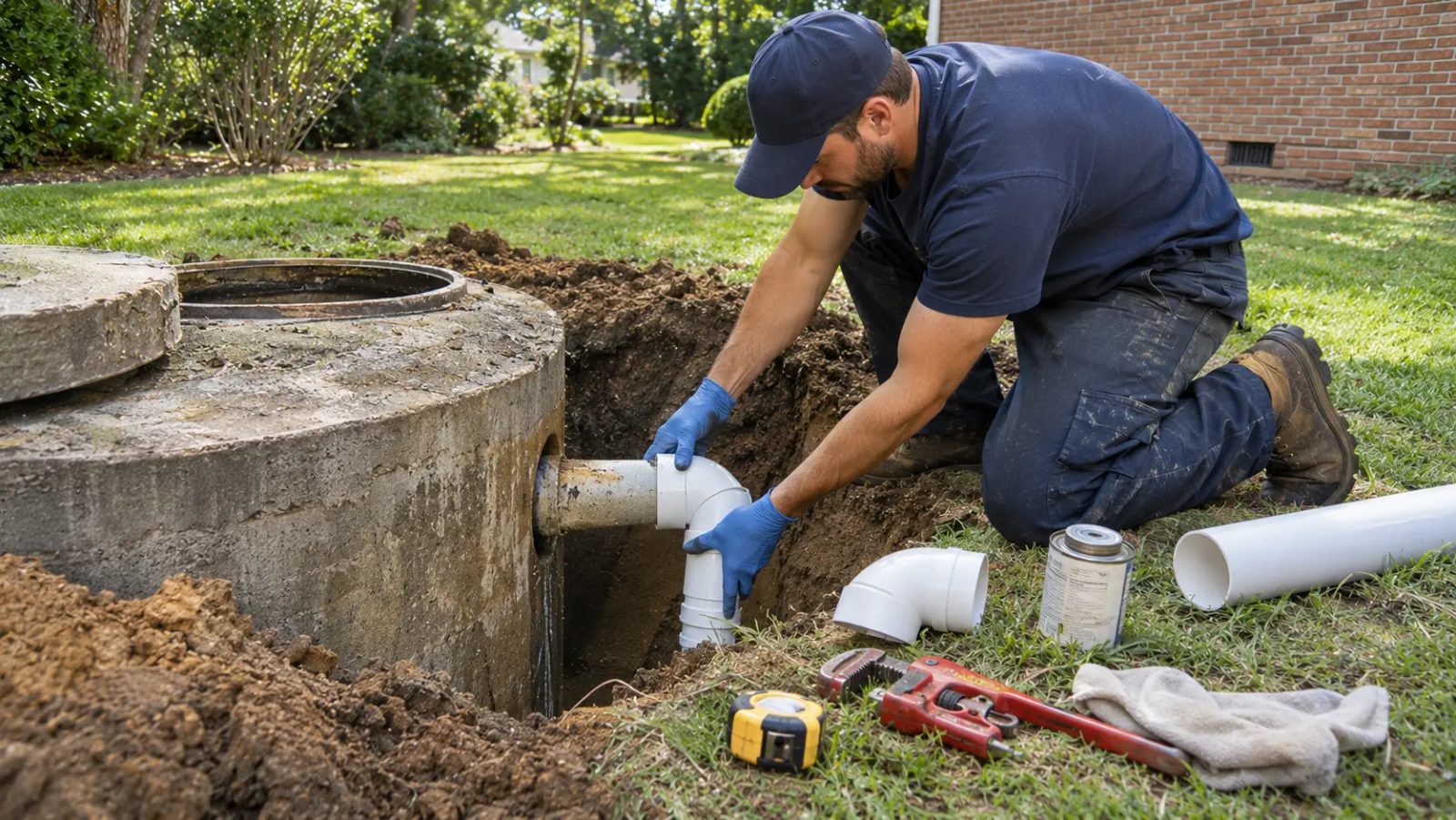
The inlet and outlet fittings help direct wastewater through the septic tank while limiting unwanted movement of accumulated solids. Damaged or deteriorated fittings can interfere with these functions. A missing or broken outlet component may allow material to move toward downstream treatment areas. During an assessment, the contractor can examine accessible fittings and determine whether replacement is appropriate. The condition of connected pipes and the tank itself may influence the repair method. Addressing a damaged component promptly can help protect other parts of the wastewater system. Ask whether any additional inspection is recommended to establish if the fault has already affected downstream equipment.
Septic access covers must remain secure and suitable for their location. A cracked, displaced or deteriorated cover can create a serious safety hazard, particularly where children, animals or visitors use the surrounding yard. Surface water may also enter through unsuitable openings. Keep people away from suspected unsafe covers and do not attempt to stand on or lift them. The contractor can assess the access arrangement and discuss suitable replacement components. Repair decisions should account for the tank's construction, cover compatibility and surrounding ground conditions. Secure access is important both for everyday property safety and for future maintenance appointments.
Some septic systems use pumps to move wastewater between treatment or dispersal components. These systems may include alarms that warn of elevated liquid levels or equipment faults. An alarm can indicate several possible problems, including electrical interruptions, control issues or mechanical failure. The contractor must establish which equipment is installed and what caused the warning. Avoid repeatedly resetting alarms or opening electrical controls yourself. Reduce unnecessary water use while arranging assistance, particularly when the system appears unable to move wastewater normally. The appropriate repair may involve a specific component rather than replacement of the entire pumping arrangement.
Septic tanks can develop structural problems because of deterioration, unsuitable loading, ground movement or damage from external activity. Cracks and other defects may allow groundwater to enter or wastewater to escape. Some conditions are difficult to identify without appropriate professional assessment. A contractor can consider accessible observations, the tank's material and its surrounding conditions before recommending corrective work. Certain defects may be repairable, while others may require replacement. Avoid assuming that a surface patch will address a structural concern adequately. Discuss the expected result of any proposed repair and whether additional evaluation or regulatory approval is necessary.
You can submit a repair request without knowing the name of the damaged component.
The contractor can investigate the fault and explain whether repair or replacement is appropriate.
Requests can identify damaged covers, wastewater exposure and other conditions requiring particular caution.
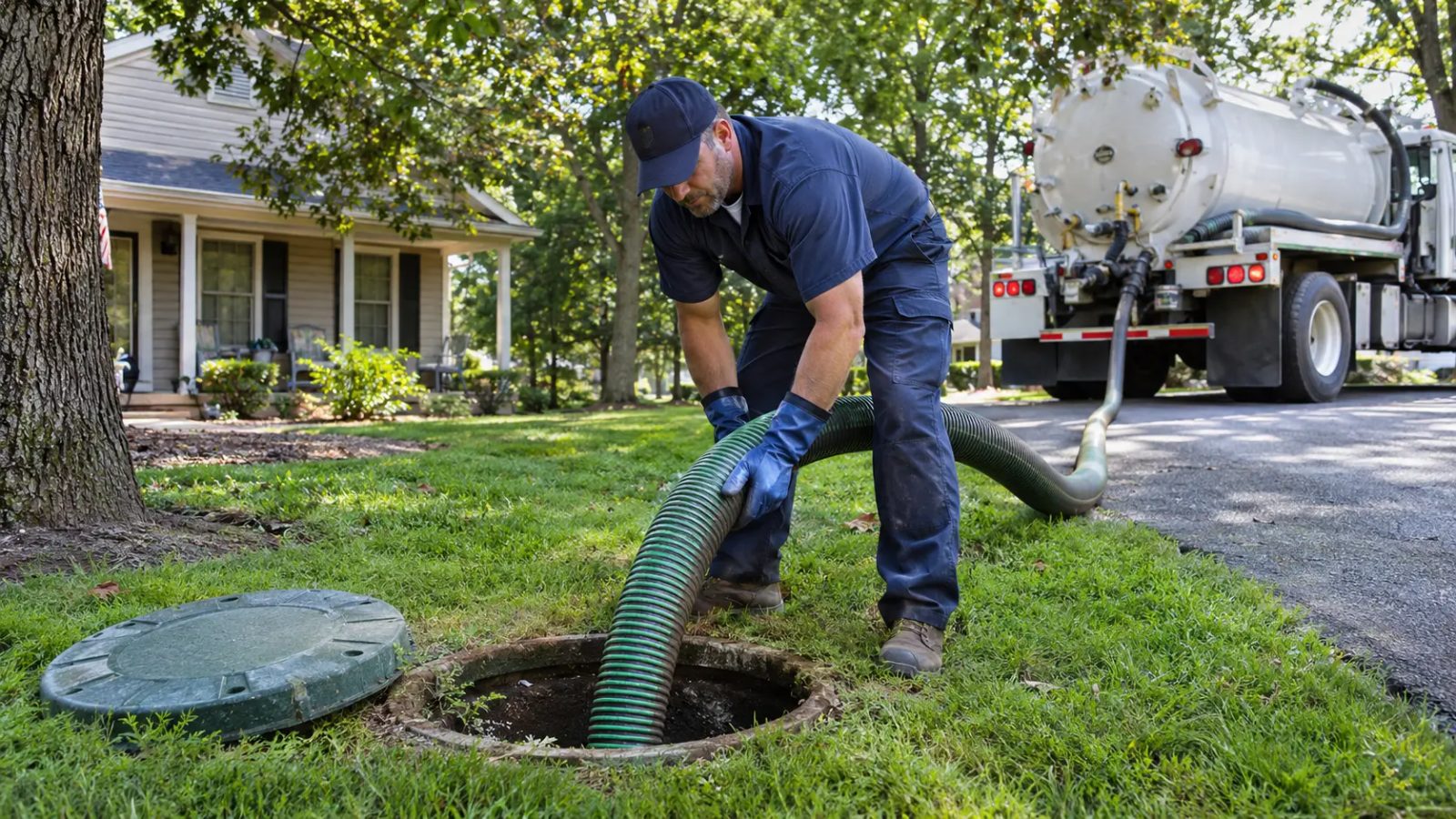
Describe the fault and arrange a conversation about suitable septic repairs.
Free — no obligations
Describe affected fixtures, outdoor conditions, alarms and any known damage.
The contractor discusses the urgency and determines what investigation is necessary.
Review the identified fault, proposed materials and estimate before agreeing to the work.
Ask the contractor what checks were completed and whether further monitoring or maintenance is recommended.
No. Repair suitability depends on the material, location and severity of the damage, along with applicable requirements.
The underlying high-level or equipment problem may still be present. Arrange professional investigation rather than relying on repeated resets.
Yes. An outlet defect can allow excessive solids to move toward other treatment components, potentially contributing to blockages.
A damaged cover creates a potential fall and exposure hazard. Keep the area isolated and arrange professional assessment promptly.